Showing posts with label security. Show all posts

Wednesday, September 2, 2020

Liberty and Justice Cancelled?


Men sleeping in front of an abandoned building in Whiteclay, Nebraska (population seventeen). Whiteclay is two miles from the Pine Ridge Reservation and consists of four liquor stores that sell an average of 12,500 cans of beer a day, mostly to the residents of the Reservation.


Alice C. Linsley


The recent violence in some of America's cities has focused attention on the failure of the American Republic to secure liberty and justice for all.

Black lives matter. To be black in the United States is not an identity. Some black Americans are rich and some are poor. Some commit crimes and some are law-abiding. Some are uneducated and some are well-educated. Some are on the Left politically and some are on the Right. Many are moderates who simply want to live securely in peaceful neighborhoods. 

Among the black Americans are African immigrants from Kenya, Ghana, Nigeria, and Somalia. Their problems and concerns are different from native black Americans.

The Black Lives Matter protests appear to represent a generation of left-leaning activists whose concerns for liberty and justice are focused too narrowly. Not all black lives matter to them. Some black voices are cancelled because they don't share the narrative of overthrow of the structures that make America a republic. 

Cancelled are the voices of black persons who applaud efforts at criminal justice reform.

Cancelled are the voices of black persons who speak against killing the unborn.

Cancelled are the voices a black persons who have decided to vote for the Trump-Pence ticket in November.

Cancelled are the voices of black persons who question the motivation of BLM leaders and organizers. 

Some wonder why recent photos of inner city riots do not show many black people? 

Some wonder if the Black Lives Movement has itself been cancelled by the violent actions of groups like Antifa?

Where is the "liberty and justice for all" that the socialist Francis Bellamy (1855-1931) hoped to see and which is enshrined in the words of the Pledge of Allegiance?


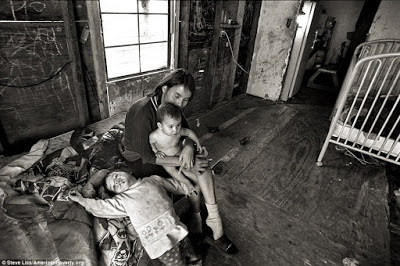
Who is speaking for other Americans who have suffered injustice? The Cheyenne Nation was once a proud and strong people. Today they are among the poorest in America. The most recent U.S. Census estimates show Zieback County, home of the Cheyenne River Indian Reservation, as the poorest in the United States. In fact, of the seven poorest counties in the United States, South Dakota has over half of them - all homes to Indian reservations.

Do Native American lives matter?

Do the poor whites of Appalachia matter? Although the Appalachia region’s poverty rate declined 1.2 percentage points since 2009–2013, Appalachia’s poverty rate remains higher than the U.S. average. However, the difference is not great: Appalachia 15.8% vs the nation 14.1 %.

Poverty in the United States poses the greatest threat to our Constitutional Republic. Consider how the Covid-19 slowdowns, lockdowns, and shutdowns have worsened this problem. Until we as a nation care about all lives equally and take immediate steps to address poverty, our fragile hold on liberty and justice for all may slip away, possibly forever.

Related reading: History of the Pledge of Allegiance; When a Riot Becomes a Revolution; Anxiety About New Poverty Guidelines; What Makes a Good Society?


Sunday, September 20, 2015

A Muslim Kid with a Clock


Alice C. Linsley

The 14-year old Muslim boy who brought a homemade clock to school was arrested on suspicion of bringing a bomb. The boy was handcuffed and questioned by five police officers at MacArthur high school in Irvine, Texas. Was this over-reaction or proper security?

Ahmed Mohamed
This wasn't a school project. Ahmed said that he wanted to impress his teachers. One teacher said he shouldn't show it to the other teachers. It beeped in 6th period class and he showed it to that teacher. She said it looked like a bomb and reported it. Ahmed said, "From my perspective it didn't look like a bomb."

Here is the statement from one of the White House staff, DJ Patil, on Ahmed Mohamed: 

"Yesterday, a 14-year-old student named Ahmed Mohamed was arrested for bringing his engineering project (an electronic clock) to his high school. Officials mistook it for a bomb.

When I was growing up, my friends and I were fortunate to know how to use soldiering irons, circuit boards, and even a bit of duct tape when nothing else worked. We played, experimented, and learned through trial and error.

The best part? When I brought my work in, my teachers loved it. And that fed my desire to embrace science, engineering, and technology. That learning to play with technology -- that curiosity -- has helped me on every step of my journey so far.

That's why I’m so proud to see people across the country standing up for the innovation and intellectual curiosity that Ahmed has shown.

That includes the President."


President Obama Tweeted:

"Cool clock, Ahmed. Want to bring it to the White House? We should inspire more kids like you to like science. It's what makes America great."

The President and his wife are known to encourage young people in the sciences. But is this really about education? Would this even have made national news if the boy had been a Christian? The President's praise is for a Muslim boy who the President thinks has been treated unfairly. Would the President have noticed a Christian boy arrested under the same circumstances?

Personally, I think that was a nice gesture on the part of the President. It may soften the boy's trauma at being handcuffed and questioned, assuming Ahmed was traumatized. He strikes me as a young man who enjoys the attention. That is what he wanted when he brought his clock in a briefcase to school.

Richard Dawkins tweeted similar suspicions. Dawkins said: “If this is true, what was his motive? Whether or not he wanted the police to arrest him, they shouldn’t have done so.” In a subsequent tweet, Dawkins said: “Assembling clock from bought components is fine. Taking clock out of its case to make it look as if he built it is not fine. Which is true?

“Yes, there are other reasons why a boy might take a clock out of its casing and pretend he’d made it. Trying to impress teachers, for instance."

Dawkins doubts the boy designed the clock. Yet this young man won a robotics contest in junior high. His family is of Sudanese heritage and his older sister was suspended for reportedly threatening to blow up the school. You would think that Ahmed would recognize that the need for better judgement, but in general teens notoriously are lacking in good judgement.

Ahmed's arrest triggered allegations of racism and Islamophobia from the Left and caution from the Right. Kevin Jackson discussed the Muslim with the clock, insisting that this is a set up; a crying wolf so that next time a Muslim kid brings an electronic device to school in a briefcase people will not react so quickly.

There has since been an outpouring of support for the young man in a NASA T-shirt and handcuffs. Ahmed has received a gift of a Surface Pro 3, a Microsoft Band, a 3D printer, an Office 365 subscription, and much more. These were delivered to him by a Muslim woman Alia Salem who Tweeted: "Enjoyed delivering box of tech goodies gifted by @microsoft to Ahmed! Mashallah!"

Ahmed will continue to receive attention from this incident and much sympathy. Sympathies will swing to Muslims as a whole. Rights groups will jump on this, and the police of this Texas town will likely face litigation for doing their job. Lots of trouble will come out of Ahmed's attention-getting behavior.

Sunday, January 5, 2014

Marines Evacuate US Embassy in South Sudan


By Cheryl Pellerin
American Forces Press Service

WASHINGTON, Jan. 3, 2014 – Marines evacuated about 20 U.S. Embassy staff members from the deteriorating security situation in Juba, South Sudan, on the same day the State Department announced it will add $49.8 million to humanitarian assistance the United States has provided to help victims of the conflict there.

The new aid brings to $300 million the assistance the United States has provided in fiscal years 2013 and 2014 to help South Sudanese victims of conflict and refugees seeking asylum in South Sudan, according to a media note released today by the State Department.

At the Pentagon, spokesman Army Col. Steven Warren briefed the press about the evacuation from Juba requested by the State Department.

"Early this morning," he said, "the Department of Defense sent two KC-130 aircraft [pre-positioned in Entebbe, Uganda, and] assigned to the Special-Purpose Marine Air Ground Task Force-Crisis Response, also called the SPMAGTF-CR, … to Juba to evacuate approximately 20 personnel."

Soldiers from the East Africa Response Force, assigned to U.S. Africa Command and under the command and control of Combined Joint Task Force-Horn of Africa, will continue to provide security reinforcement to the U.S. Embassy in Juba, according to an Africom statement also issued today.

Read it all here.

Thursday, July 25, 2013

Putin on Snowden, Russia-US relations


President Vladimir Putin says Russian-American ties are more important than the issue of the fugitive former U.S. intelligence leaker Edward Snowden, who is currently sheltering at a Moscow airport.

'Our bilateral ties, in my view, are much more important than any squabbles around the work of security services,' Putin told journalists in the context of questions about tensions related to the U.S. contractor.

Snowden has been in the transit area of Moscow's Sheremetyevo Airport since June 23 and has requested temporary asylum in Russia.

Putin said he was more focused on the task of developing U.S. relations.

'We have warned Mr. Snowden that any activity on his part that could harm Russian-U.S. relations is unacceptable to us,' Putin said, repeating a warning from July 1.

Read it all here.


Tuesday, July 23, 2013

Two questions for Eric Holder


Here are two questions for Eric Holder:


1.  Zimmerman was on neighborhood watch because there'd been a rash of break-in at that housing development.  So, how many break-ins were reported after the Zimmerman-Martin confrontation?

2.  Our attorney general is protected by an armed security team.  Should an attacker come toward the attorney general, should his security team shout, "Come on, Eric, let's run for it!" -- or does he want them to stand their ground and shoot?

From here.

Tuesday, April 16, 2013

Karzai angry over border gate


Afghan Defense Ministry spokesman Zahir Azimi has accused Pakistan of violating “international norms” by installing a border gate and checkpoint along a disputed Durand line between the two countries.

Karzai suspects US aided Pakistan in building the gate.


Read the report here.

Saturday, March 30, 2013

US Air Power Down-Sizing


3/28/2013 - WASHINGTON (AFNS) -- The Air Force released its plan Mar. 28 to implement force structure changes mandated by the Fiscal Year 2013 National Defense Authorization Act.

The bill authorized the service to complete actions approved in previous years, such as aircraft retirements, and directed execution of Congressionally-approved force structure actions.

Some of these changes were outlined in the Air Force's Total Force Proposal, developed in coordination with the Air National Guard and Air Force Reserve. Others were congressionally-directed.

'Our Air Force continues efforts to maximize the strength of our Total Force, and we are pleased with the progress that is being made on this front,' said Secretary of the Air Force Michael Donley. 'This implementation plan illustrates the Air Force's continued commitment to transparency as it completes the force structure requirements directed and authorized by the NDAA.'

The NDAA directs a reduction of 65 aircraft and approximately 1,400 military billets from the Air National Guard, 57 aircraft from the Air Force Reserve, and 122 aircraft and approximately 6,100 military billets from the active-duty Air Force.

Read it all here.

Friday, March 29, 2013

US Bombers Over Korea


Steve Herman 
March 28, 2013


U.S. B-2 bombers have conducted a firing drill on the Korean peninsula.

The U.S. military is making no secret that the non-stop flights of a pair of B-2 bombers Thursday from the United States to South Korea should be interpreted as a signal to North Korea.

A military news release announcing the mission says it 'demonstrates the United States' ability to conduct long range, precision strikes quickly and at will.'

The strategic stealth bombers flew from Whiteman Air Force Base in the U.S. state of Missouri to drop inert munitions on an island off the southwestern coast of the Korean peninsula before heading back to their home base - a 20,000 kilometer non-stop trip.

Shin In-kyun, who heads the Korea Defense Network - an alliance of military experts based in Seoul - says it is unprecedented for the U.S. Air Force to be so transparent about such B-2 flights.

Shin says this means that the United States is taking seriously the provocative language from Pyongyang. And the B-2 is "a weapon North Korea fears the most."

Read it all here.

Monday, October 15, 2012

Sub and Cruiser Collision


Navy News Service

By U.S. Fleet Forces Public Affairs


NORFOLK, Va. (NNS) -- There were no injuries as a U.S. Navy submarine and an Aegis cruiser collided off the coast of the Eastern United States on Saturday afternoon (10/13/12).

The collision between USS Montpelier (SSN 765) and USS San Jacinto (CG 56) occurred at approximately 3:30 p.m. Eastern Daylight time.

No personnel aboard either vessel were injured.

Overall damage to both ships is being evaluated. The propulsion plant of the submarine was unaffected by this collision. Both ships are currently operating under their own power.

The incident is currently under investigation.

Both the submarine and the ship were conducting routine training at the time of the accident.


Saturday, September 15, 2012

Remember Our Fallen in Libya


By Cheryl Pellerin
American Forces Press Service

WASHINGTON, Sept. 14, 2012 – The State Department has identified the two security officers who died Sept. 11 in Benghazi, Libya, while helping to protect their colleagues.

In a Sept. 13 statement, Secretary of State Hillary Rodham Clinton said Tyrone S. Woods and Glen A. Doherty were “decorated military veterans who served our country with honor and distinction.”

The attacks on the U.S. Consulate in Benghazi also killed U.S. Ambassador J. Christopher Stevens and Foreign Service information management officer Sean Smith, and wounded three other Americans who are recovering at the Landstuhl Regional Medical Center in Germany.

The State Department previously identified Stevens and Smith.

On Sept. 12, President Barack Obama issued a proclamation ordering U.S. flags to fly at half-staff until sunset on Sept. 16 in honor of Stevens, Smith, Woods and Dougherty.

Obama, Clinton and Defense Secretary Leon E. Panetta today took part in a dignified transfer of the remains of the four Americans during a ceremony at Joint Base Andrews in Maryland.

“Our thoughts, prayers and deepest gratitude are with their families and friends. Our embassies could not carry on our critical work around the world without the service and sacrifice of brave people like Tyrone and Glen,” Clinton said in the statement.

Wood’s friends and colleagues called him “Rone” and relied on his courage and skill, honed over two decades as a Navy SEAL, she added.

“In uniform he served multiple tours in Iraq and Afghanistan,” Clinton said. “Since 2010, he protected American diplomatic personnel in dangerous posts from Central America to the Middle East.”

Woods had the hands of a healer and the arm of a warrior, she said, earning distinction as a registered nurse and a certified paramedic.

“All our hearts go out to Tyrone’s wife Dorothy and his three sons, Tyrone Jr., Hunter and Kai, who was born just a few months ago,” the secretary said.

“We also grieve for Glen Doherty, called Bud, and his family: his father Bernard, his mother Barbara, his brother Gregory and his sister Kathleen,” Clinton added.

Doherty was also a former Navy SEAL and an experienced paramedic who put his life on the line protecting Americans in Iraq, Afghanistan and other hotspots, she said.

“In the end, he died the way he lived -- with selfless honor and unstinting valor,” the secretary said.

Clinton condemned in the strongest terms the attack that took the lives of the Americans, and said the United States is taking more steps to safeguard American embassies, consulates and citizens around the world.

“The violence should shock the conscience of people of all faiths and traditions,” Clinton added.

“We appreciate the statements of support that have poured in from across the region and beyond. People of conscience and goodwill everywhere must stand together in these difficult days against violence, hate and division,” she said.

The secretary said she is enormously proud of the men and women who risk their lives every day in the service of the country.

“We honor the memory of our fallen colleague by continuing their work and carrying on the best traditions of a bold and generous nation,” Clinton said.


Thursday, September 13, 2012

Erosion of Free Speech in the USA


As Barack Obama got ready to rally his troops at the Democratic National Convention, Mark Rumold, Open Government Legal Fellow at Electronic Frontier Foundation (EFF), said his administration has cast free speech aside in its pursuit of file sharers and whistleblowers:

Four years ago, President Obama's campaign platform didn't include sweeping promises about promoting free speech. He wasn't elected because he swore to vigorously defend the First Amendment, and to protect speakers no matter the content of their speech.

In contrast, the President did campaign on a platform of government transparency. As a transparency advocate, I can confidently say that, by almost any measure, the President failed to live up to those lofty guarantees.

But what about free expression — a value so roundly cherished in the United States that a promise to support it would almost seem unnecessary? Without a clear benchmark or unambiguous campaign commitment on the issue, it's not so simple to assess his record. But sadly, like his commitment to transparency, the President's commitment to free speech was often collateral damage in his pursuit of other policy objectives.

This was most evident in the administration's actions in two areas: intellectual property and national security.

The administration's often misguided attempts at combating online copyright infringement frequently resulted in harm to protected expression. For example, in 2010, working in close cooperation with industry trade groups like the Motion Picture Association of America and the Recording Industry Association of America, the administration began seizing the domains of websites that government officials deemed to contain infringing material. Except that wasn't always the case: in at least two instances, the government seized — and refused to return — domain names without any apparent connection to copyright-infringing material. The seizures resulted in complete censorship of the sites for over a year.

The same is true of the administration's heavy-handed treatment of Megaupload, an online file-hosting service. In January 2012, the Department of Justice seized Megaupload's domains and servers, froze its assets, and attempted to have the site's founder, Kim Dotcom, extradited to the United States to face criminal charges. While the site undoubtedly hosted some infringing content, there was also a vast amount of non-infringing content stored on the site's servers — family photos and videos, personal documents, and other protected expression. All this unquestionably protected speech was swept up in the name of combating online copyright infringement.

While the administration's pursuit of intellectual property enforcement caused collateral damage to protected expression, the administration's biggest tests — and, subsequently, biggest failures — in its commitment to free speech occurred in the national security arena.

National security concerns caused the Administration to investigate and charge government whistleblowers under the Espionage Act and led to the questionable prosecution of alleged terrorists for “crimes” as innocuous as translating YouTube videos and writing vulgar and hateful poetry.

Yet nowhere were the administration's First Amendment failings more evident than in its handling of Wikileaks. After Wikileaks published thousands of confidential (and, in some cases, classified) State Department diplomatic cables, the administration embarked on an unprecedented intimidation campaign. In particular, the Department of Justice's long-running grand jury investigation of Wikileaks and its founder, Julian Assange, stands as a press-chilling stain on the administration's First Amendment record. The message the administration sent through its investigation is clear: if you publish classified information — and, in particular, classified information that portrays the government in an unflattering light — we may prosecute you. Classified information is published almost daily in the country's most reputable newspapers and magazines. Punishing the publication of truthful information about the government, absent a clear and present danger posed by the information's disclosure, is intolerable under the First Amendment. Yet this was precisely the administration's extraordinary approach. Indeed, the most enduring legacy of the Obama administration's commitment to free speech may be the long shadow in cast upon national security reporting.

There were bright spots, however. The administration made promoting free expression abroad a focal point of Secretary of State Hillary Clinton's international agenda. For example, in a thinly veiled jab at China, Secretary Clinton stated, “Countries that want to be open for business but closed to free expression will find that this approach comes at cost[.]” Secretary Clinton similarly called on regimes in the Middle East to ease restrictions on free expression.

But these are the easy cases — it's not politically difficult to champion the rights of those living beneath repressive regimes. The true test of an administration's commitment to free expression can only come in relation to the closer cases — those that strike near home or that implicate other policy goals. Seen through this lens, over the past four years, the Obama administration often abdicated its responsibility to protect free expression in pursuit of more politically expedient goals.

From here.

Friday, September 7, 2012

Nepal Communist Party De-Listed


The Department of State has revoked the designation of the Communist Party of Nepal (Maoist) (CPN(M)) and its aliases as a Specially Designated Global Terrorist entity under Executive Order 13224, and as a “terrorist organization” from the Terrorist Exclusion List (TEL) under the Immigration and Nationality Act (INA). With these actions, the CPN(M)’s property and interests in property in the United States or within the possession or control of U.S. persons will no longer be blocked, and U.S. entities may engage in transactions with CPN(M) without having to obtain a license.

After a thorough review, the Department has determined that the CPN(M) is no longer engaged in terrorist activity that threatens the security of U.S. nationals or U.S. foreign policy. Additionally, in recent years, the Maoist party has been elected as the head of Nepal’s coalition government, has taken steps to dismantle its apparatus for the conduct of terrorist operations, and has demonstrated a credible commitment to pursuing the peace and reconciliation process in Nepal. Today’s delisting does not seek to overlook or forget the party’s violent past, but rather looks ahead towards the party’s continued engagement in a peaceful, democratic political dialogue in Nepal.

This delisting reflects the United States’ resolve to keep our terrorism sanctions current and demonstrates that a group need not stay on a terrorist list forever should it demonstrate a credible commitment to pursuing peace and reconciliation.

Source: Global Security.org

Saturday, August 18, 2012

Brahimi Appointed to Syria Crisis


Veteran diplomat Lakhdar Brahimi will be the new Joint Special Representative of the United Nations and League of Arab States for the crisis in Syria, taking over the peace-facilitation role played over the past several months by former UN Secretary-General Kofi Annan, a spokesperson for the world organization said today.

Mr. Brahimi is expected to assume his duties following the expiration of Mr. Annan’s mandate on 31 August 2012.

“The Secretary-General appreciates Mr. Brahimi’s willingness to bring his considerable talents and experience to this crucial task for which he will need, and rightly expects, the strong, clear and unified support of the international community, including the Security Council,” a UN spokesperson said at a media briefing at UN Headquarters in New York.

He added that both Secretary-General Ban, and his counterpart at the League of Arab States, Nabil El Araby, were pleased to make the announcement of the appointment.

“Diplomacy to promote a peaceful resolution to the conflict in Syria remains a top priority for the United Nations,” the spokesperson said. “More fighting and militarization will only exacerbate the suffering and make more difficult the path to a peaceful resolution of the crisis which would lead to a political transition in accordance with the legitimate aspirations of the Syrian people.”

The President of the General Assembly, Nassir Abdulaziz Al-Nasser, also welcomed Mr. Brahimi’s appointment. According to a statement issued by his spokesperson, Mr. Al-Nasser thanked Mr. Brahimi for accepting to undertake what he called “a crucial assignment” aimed at ending the Syrian violence.

“Mr. Brahimi brings to this difficult task his well-known experience, credibility and diligence,” the statement said. “President Al-Nasser wishes him success in his endeavours.”

Mr. Annan was appointed Joint Special Envoy for the crisis in Syria in late February to provide good offices on behalf of the UN and Arab League, with the aim of bringing an end to all violence and human rights violations in Syria, and promoting a peaceful solution to the conflict.

Syria has been wracked by violence, with more than 17,000 people, mostly civilians, killed since the uprising against President Bashar al-Assad began some 17 months ago. Over recent days, there have been reports of an escalation in violence in many towns and villages, as well as the country’s two biggest cities, Damascus and Aleppo.

As part of his efforts, Mr. Annan put forward a six-point peace plan. It called for an end to violence, access for humanitarian agencies to provide relief to those in need, the release of detainees, the start of inclusive political dialogue, and unrestricted access to the country for the international media.

Despite initial signs of acceptance of the six-point plan, repeated calls from international officials and the deployment of the UN Supervision Mission in Syria (UNSMIS) to monitor a ceasefire, there was little in the way of the plan’s implementation by the parties to the conflict.

Due to that lack of progress, UNSMIS’ mandate is expected to be allowed to expire this coming Sunday by the Security Council, while that body is at the same time working with Secretary-General Ban to keep a UN presence on the ground, through a liaison office that will continue to support the Special Representative’s efforts.

“The Secretary-General takes this opportunity to reiterate his deepest gratitude to former Secretary-General Kofi Annan for his selfless efforts and contributions to the search for peace in Syria,” the spokesperson added.

Mr. Brahimi, an Algerian national, has served the United Nations in various high-level roles over in the past two decades, including heading the UN Assistance Mission in Afghanistan (UNAMA), serving as an advisor on a range of issues, and chairing an independent panel on peacekeeping operations which released its keynote findings, known as the “Brahimi Report,” in 2000. Also, as an Algerian diplomat, Mr. Brahimi served with the League of Arab States from 1984 to 1991.


Friday, February 17, 2012

Moroccan Arrested in FBI Sting


Federal authorities on Friday arrested a 29-year-old Moroccan man in an alleged plot to carry out a suicide bombing at the U.S. Capitol, the latest in a series of terrorism-related arrests resulting from undercover sting operations.

For more than a year, Amine El Khalifi, of Alexandria, considered attacking targets including a synagogue, an Alexandria building with military offices and a Washington restaurant frequented by military officials, authorities said. When arrested a few blocks from the Capitol around lunchtime on Friday, he was carrying what he believed to be a loaded automatic weapon and a suicide vest ready for detonation.

The gun and vest were provided not by al-Qaeda, as Khalifi had been told, but by undercover FBI agents who rendered them inoperable, authorities said.

They said Khalifi had been the subject of a lengthy investigation and never posed a threat to the public. On Friday afternoon, he made an initial court appearance in U.S. District Court in Alexandria, where he was charged with attempting to use a weapon of mass destruction against federal property. He faces life in prison if convicted.

Khalifi “allegedly believed he was working with al-Qaeda,” said Neil H. MacBride, U.S. attorney for the Eastern District of Virginia. Khalifi “devised the plot, the targets and the methods on his own.”

In several recent terrorism sting operations, critics have accused federal investigators of provoking suspects and, in some cases, suggesting possible targets or tactics. Legal experts say the FBI sometimes walks a fine line in such cases.

“You want to be very sure that the narrative is not substantially provided by the government,” said Karen Greenberg, director of the Center on National Security at Fordham Law School, who studies terrorism sting operations. “There’s a lot of gray area in these cases.”

But officials said Friday that Khalifi, who allegedly conducted surveillance on the Capitol and engaged in methodical planning, was no unwitting victim.

Khalifi arrived in the United States when he was 16 and was living as an illegal immigrant in Northern Virginia, having overstayed his visitor’s visa for years, officials said. In 2010, he was evicted from an Arlington apartment after having failed to pay rent.

The landlord of that apartment, Frank Dynda, a retired patent lawyer, said, “He was getting mysterious packages labeled ‘books,’ but I didn’t think there were books in them.”

Dynda said he thought Khalifi was “suspicious and hostile,” and Dynda reported Khalifi to Arlington police. Two officers visited Dynda’s apartment building soon after the report but told him there was no reason to pursue the matter, he said.

It was unclear how Khalifi came to the attention of federal authorities. According to the criminal complaint filed in court Friday, a confidential source reported to the FBI in January 2011 that Khalifi had met at a residence in Arlington with individuals, one of whom produced what appeared to be an AK-47 assault rifle, two revolvers and ammunition.

Read the full report here.

Wednesday, February 15, 2012

"Well-Trained Terrorist" Attacked Israeli Diplomat


Kurt Achin
New Delhi


Indian Home Minister P. Chidambaram says Monday evening's car blast was targeted at an Israeli diplomat's wife.

"It's quite clear that a very well-trained person has committed this attack," he said. "One has to proceed on the basis that it was a terrorist attack."

The attack was carried out in one of New Delhi's most secure districts -- only a few blocks from the residence of the prime minister himself.

"It appears that a motorcycle rider, a single person, came from behind and the person attached a device to the trunk's door of the Innova," he explained. "The explosion, according to the eyewitness...happened within seconds. And, we think it happened within about four to five seconds of the device being attached."

Police are carefully scrutinizing forensic evidence and closed circuit television footage from the vicinity of the explosion. Israeli intelligence is cooperating in the investigation. The Israeli diplomat's wife is described as in critical but stable condition and is recovering from shrapnel wounds and spinal injury.

Israel is openly blaming Iran for the attack. Iran denies involvement. And the official Iranian media quote a Foreign Ministry spokesman who accuses Israel of attacking its own embassies as part of a “psychological war” to tarnish relations against Iran.

Indian Home Minister Chidambaram was careful not to assign blame Monday, saying it is too early in the investigation.

"At the moment, I am not pointing a finger at any particular group or any particular organization. But whoever did it, we condemn it in the strongest terms," he said.

Separately, police in the former Soviet republic of Georgia defused a car bomb in an Israeli embassy vehicle, raising questions about whether the two attacks are connected.

There are apparent similarities between Monday's magnet bomb strike and attacks on Iranian nuclear scientists for which Iran blames Israel. Many Indians are now wondering whether their country will become a new front for a covert conflict between Israel and Iran because of the latter's nuclear program.
 
India has strong historical ties to Iran and depends heavily on it for imported fuel. India has resisted calls from Western nations to sanction the country for its nuclear program and is planning to send a massive trade delegation to Tehran later this month.

Western powers accuse Iran of trying to develop nuclear weapons under cover of a civilian energy program, a charge Tehran denies.

Source:  Global Security

Tuesday, January 31, 2012

Iran Enriched Uranium Fuel Sheets at 20-percent

IRNA - Islamic Republic News Agency, News Code: 30787319


Addis Ababa, Jan 29, IRNA -- Islamic Republic of Iran’s Foreign Minister Ali Akbar Salehi said that the 20-percent nuclear fuel sheet will be installed in Tehran research reactor facility next month.

Salehi made the remarks to the reporters on the sidelines of the 18th African Union Summit in the Ethiopian capital Addis Ababa on Sunday.

'After our partners refrained from fulfilling their commitments with regard to procurement of fuel of Tehran research reactor, we attempted to enrich the required uranium to the level of 20 percent in accordance with our legal rights,' he added.

Salehi pointed out although our partners did not believe that IR Iran could achieve the technology of uranium enrichment to the level of 20 percent and converting it into fuel sheet, they will witness Iran’s installation of fuel sheets in Tehran research reactor within next month.

Asked about the security of the Strait of Hormuz, the foreign minister said that the security of Hormuz should be maintained in order to help everyone benefit from it.

“Strait of Hormuz is a strategic and important region not only for Iran and the regional countries, but also for countries of the world. Iran considers itself more responsible than any other country for maintaining security and stability of the region, especially Strait of Hormuz,” he added.

Salehi noted that Iran has proven that it is an important role-player in establishing security in the region.

“What I emphasize on is that the countries outside the Persian Gulf zone are not entitled to decide about the privileges and benefits of the Strait of Hormuz,” he added.

Salehi further said that the security of the Strait of Hormuz is beneficial to all and that is what Iran is looking for.

Asked whether the inspectors of the International Atomic Energy Agency are allowed to visit Iran’s nuclear sites, the foreign minister responded that they can visit any nuclear site that they ask for.

Saturday, January 28, 2012

Army Reduction about 100,000


WASHINGTON (Army News Service, Jan. 27, 2012) -- The Army will draw down in size by as many as 80,000 Soldiers over the next six years. That reduction includes the elimination of at least eight brigade combat teams.

The Army expects an active force end strength reduction from 570,000 to 490,000, said Chief of Staff of the Army Gen. Raymond T. Odierno, during a press briefing, Jan. 27, at the Pentagon.

The general said the time is "strategically right" to reduce the Army's force structure, but stressed that it would be done the right way.

"Even given a fiscally constrained environment our Army will accomplish our reductions in a responsible and controlled manner," Odierno said. "Secretary McHugh and I are committed to ensuring we walk down this hill at the ready, rather than running our nation's Army off a cliff."

Odierno said the Army would execute force reduction measures by following a "drawdown ramp that allows us to take care of Soldiers and families, while maintaining a ready and capable force to meet any requirements, including our current operations in Afghanistan."

Most of that force reduction, Odierno said, would come from attrition.

Read more here.

Friday, January 20, 2012

US Embassy in Damascus Closing


The Washington Post reports that the Obama administration is preparing to close the U.S. embassy in Damascus and evacuate all American personnel by the end of this month amid rapid deterioration of the security situation in Syria, senior administration officials said.

The embassy will be shuttered, officials said, unless embattled Syrian President Bashar al-Assad provides enhanced protection that he has so far been unwilling to authorize.

Saturday, January 7, 2012

China Warns US about Militarism in Asia


China's state media organization published an editorial Friday warning the United States on its plan to reshape and refocus its military. China's message: the U.S. shouldn't start "flexing its muscles" in the region.

The editorial in Xinhua takes issue with Obama's announcement that the military would be "strengthening" its presence in the Asia-Pacific region, even as it reduces its overall size and budget over the next 10 years. For more on the shifting focus of the U.S. military as announced yesterday, see this AP story.

The Xinhua editorial essentially tells the U.S. to play nice. Here's an excerpt:

The United States is welcome to make more contribution to peace and stability in the Asia-Pacific region, but its possible militarism will cause a lot of ill will and meet with strong opposition in the world's most dynamic region.

Read more here.

Wednesday, December 28, 2011

Afghanistan Operations Dec. 22-27

Compiled from International Security Assistance Force Joint Command News Releases

WASHINGTON, Dec. 27, 2011 – An Afghan-led and coalition-supported security force captured a Taliban facilitator during an operation in the Pul-e ‘Alam district of Afghanistan’s Logar province today, military officials reported.

The facilitator moved weapons and explosives used in attacks against coalition forces. He also allegedly was involved in a car bomb attack in Logar province that killed one civilian and injured nine others.

One additional suspected insurgent was detained during the operation.

In other Afghanistan operations:

-- An Afghan-led force in Helmand province’s Garm Ser district captured a Taliban weapons facilitator who moved weapons throughout the province. No civilians were injured.

-- In the Zharay district of Kandahar province, an Afghan-led force detained two suspects while searching for a Taliban leader who moves supplies, emplaces roadside bombs and coordinates attacks against coalition forces.

In Afghanistan operations Dec. 26:

-- A coalition patrol discovered one anti-personnel mine, two rocket-propelled grenade warheads, two 82 mm mortar rounds, and homemade bomb-making components in Ghazni province’s Andar district.


-- A coalition patrol discovered four 82 mm mortars, one landmine and bomb components in the Now Zad district of Helmand province.


-- A combined force captured a Haqqani network facilitator and two other suspects in the Bak district of Khost province.


The facilitator supplied explosives to insurgents and conducted attacks against coalition forces.


-- A combined force in Baghlan province’s Baghlan-e Jadid district detained one suspect while searching for a Taliban leader who plans direct fire and roadside bomb attacks against Afghan forces.


In Afghanistan operations Dec. 25:


-- International Security Assistance Force Commander Marine Corps Gen. John R. Allen traveled across Afghanistan to wish troops a happy holiday. “I know we can’t be with our families on Christmas Day, but I wouldn’t want to be anywhere else, if I can’t be with my family, than standing here with you and serving with you,” Allen told troops at Forward Operating Base Shindand in Herat province.


“It’s not every day you get to see a general come here, especially on Christmas Day, to tell everybody they are doing a good job,” Marine Corps Sgt. John Mohlenhoff said.

Allen also visited troops at Camp Stone and FOB Andraskan in Herat province, and Camp Marmal and Camp Spann near Mazar-e-Sharif in Balkh province. “In a very real sense, this is a family you’ll never forget because of the things that you have shared, things that you do, and the cause in which we’re all engaged,” Allen said. “For the rest of your lives, you will share this moment together -- a moment when you were a part of something bigger than yourselves. Every one of you here is contributing to the liberation of a country and giving Afghanistan hope.”


-- A coalition force discovered a drug cache containing more than 900 pounds of marijuana in the Panjwa’i district of Kandahar province. All of the drugs were destroyed.


-- A combined force killed two insurgents and seized bomb-making material and grenades during a search for a Taliban leader in the Baghlan-e Jadid district of Baghlan province. A third insurgent died after self-detonating a grenade. The leader trains insurgents to use roadside bombs and provides explosives for use in attacks against Afghan forces.


-- In the Nahr-e Saraj district of Helmand province, a combined force captured a Taliban leader and detained several other suspected insurgents. The insurgent leader provided equipment and trained fighters in the province.
-- A combined force in Kandahar province’s Zharay district detained two suspected insurgents and seized about five pounds of black tar heroin while searching for a Taliban facilitator who moves explosives and weapons throughout southern Afghanistan.
-- In the Nadir Shar Kot district of Khost province, a combined force captured a Haqqani network facilitator, detained one other suspect and seized multiple weapons. The facilitator moved and stored weapons throughout the area.

-- A combined force in Nangarhar province’s Pachir Wa Agam district captured a Taliban facilitator. who distributed weapons and munitions to insurgents for use in attacks in Jalalabad.

-- Allen, ISAF commander, condemned the suicide attack on a funeral ceremony in Takhar province that reportedly killed numerous civilians, including a member of the Afghan parliament, and wounded many others.

“Our thoughts and prayers are with the families of those affected with the loss of life and injuries in today's barbaric attack," the general said. "These attackers are cowards, callously targeting and killing families and friends who had gathered to mourn a loved one. Those responsible for this shameful act must only be interested in destruction, alienating themselves from the Afghan people. They are neither Afghan nor are they true Muslims.”


In Dec. 24 Afghanistan operations:

--Allen extended his and his command’s sincere condolences to the Afghan families who lost loved ones in the Baghlan province mine tragedy.


"Our hearts go out to the families of this tragedy and we will, of course, stand ready to provide any additional assistance necessary if called upon by the Afghan government," the general said.


The collapse of the mine in Nahrin district claimed the lives of 13 Afghans and injured another 12 workers. Provincial Reconstruction Team Pul-E Khumri provided medical and humanitarian support.


-- Combined forces discovered two drug caches in Kandahar province. The first drug cache was found in the Spin Boldak district and contained 11 tons of hashish. All of the drugs were destroyed and one person was detained. The second cache was discovered in the Panjwa’i district and contained about 300 pounds of marijuana. The drugs were destroyed.


-- A combined force seized four rocket-propelled grenades and some small-arms ammunition in Uruzgan province’s Tarin Kot district.

In Dec. 23 Afghanistan operations:
-- Afghan soldiers with the 1st Brigade, 205th Afghan National Army Corps completed a week-long independent operation in the Panjwa'i, district of Kandahar province. Operation Hope Hero 58 was the first of its kind in Kandahar province where the Afghan National Army has taken the lead in an operation to include planning, coordinating and executing the mission separately from their U.S. partners. The Afghan army worked closely with Afghan police, Afghan National Civil Order Police and Afghan National Defense Services to conduct clearing operations in the Kenjekak and Zangabad villages of the Panjwa'i district of southern Kandahar province. During the six-day operation, more than 400 Afghan National Security Forces discovered multiple caches containing a large amount of bomb-making material to include ammunitions, more than 10 pressure plates, ignition systems and more than 1,000 pounds of homemade explosives -- enough material to make more than 60 homemade bombs.


In Dec. 22 Afghanistan operations:


-- A combined force seized a drug cache containing 910 pounds of marijuana in the Daman district of Kandahar province. The drugs were destroyed.


-- In the Zurmat district of Paktia province, a combined patrol found 20 anti-personnel mines and 60 blocks of explosives.


-- Also in Zurmat, a combined patrol found five RPGs, three 82 mm rockets, 440 rounds of small-arms ammunition and one radio-controlled receiver. Security forces destroyed all of the items.


Source: Global Security